Read the finish as well as the name
Fabric names, surface finishes, and fiber composition describe different things. Satin describes a weave and surface character; a silk-touch finish does not establish silk content. Use the listed product information and the actual maker’s composition label when choosing a real piece.
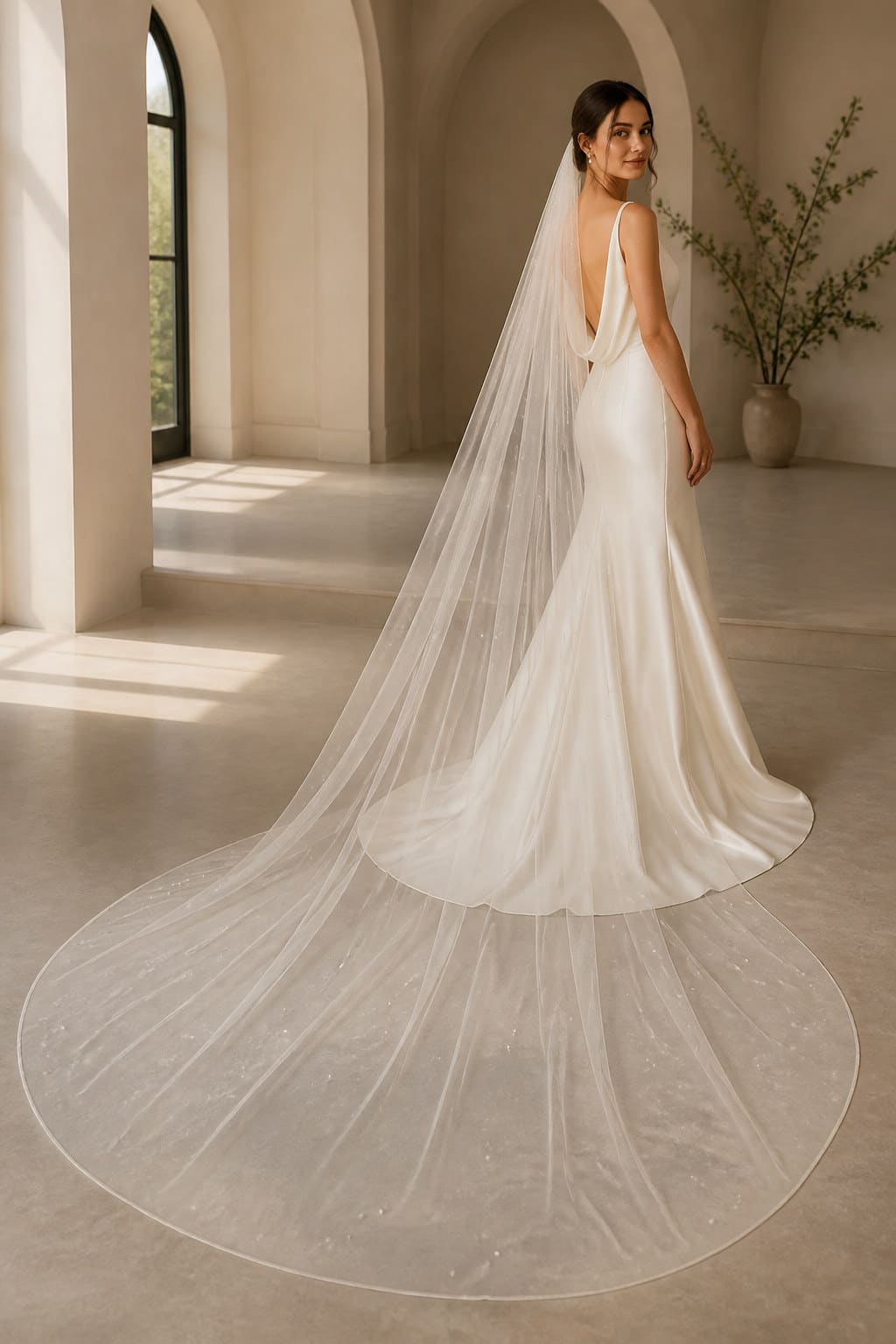
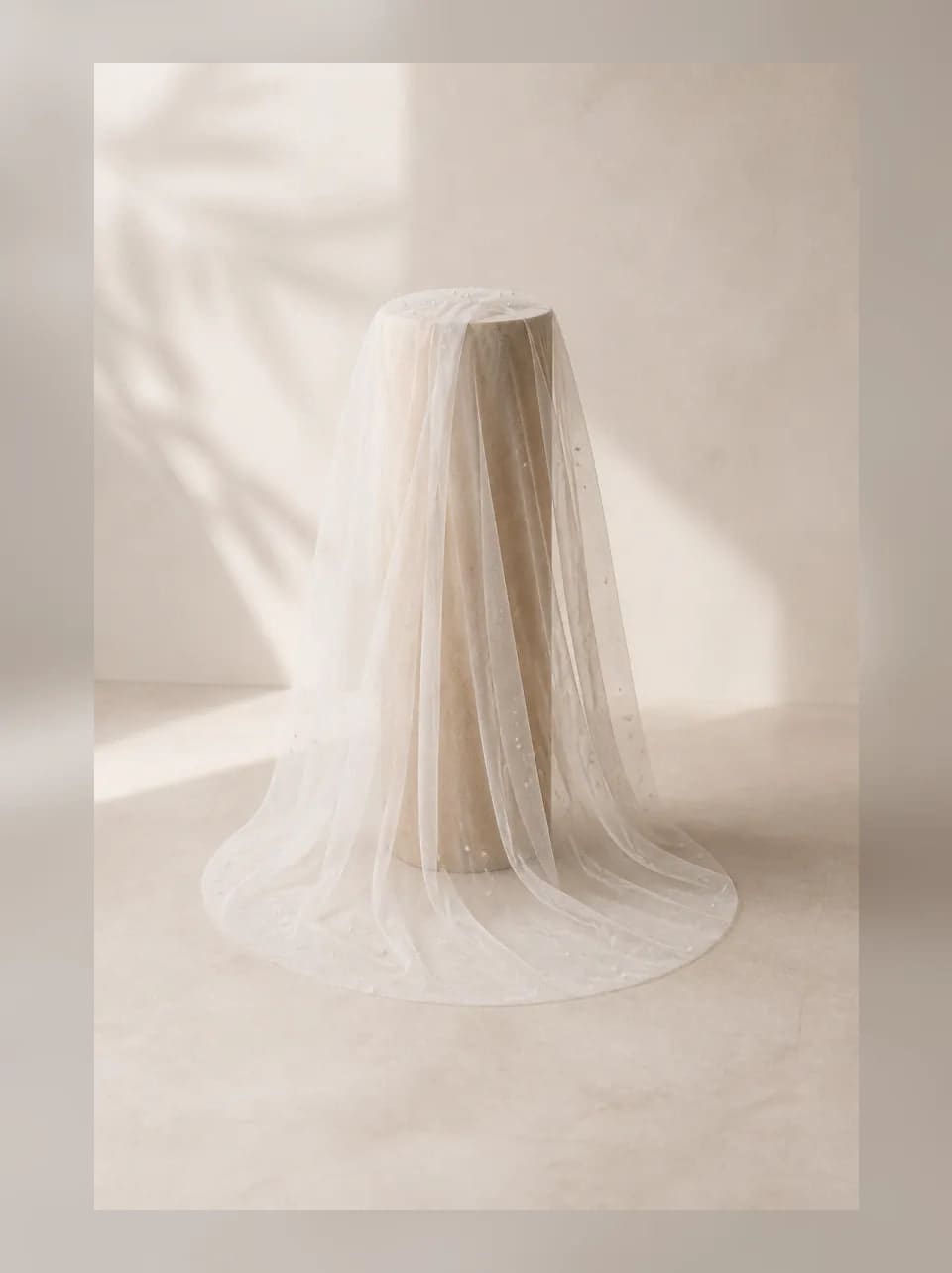
Let tulle introduce lightness
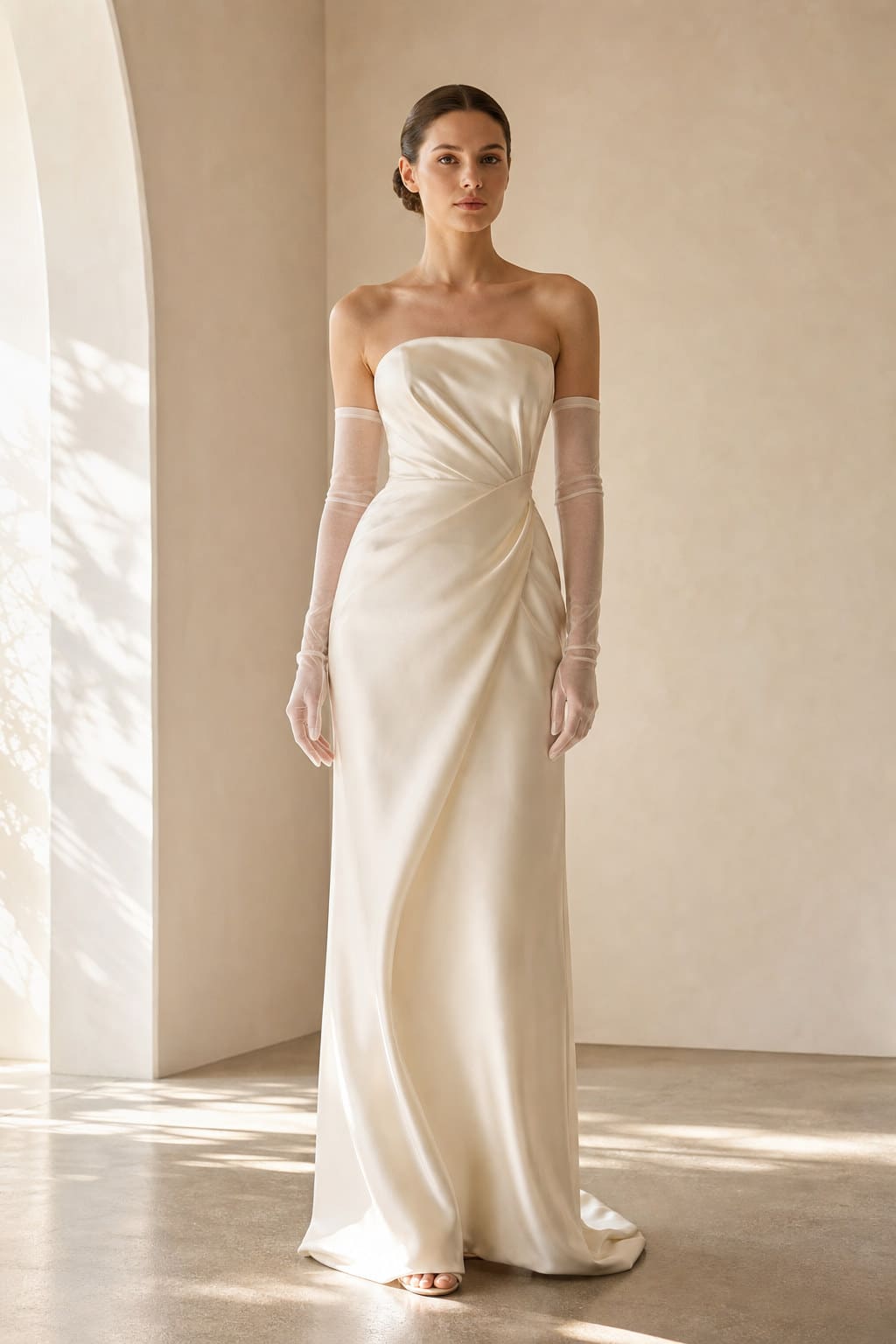
A sheer veil or glove can add texture while leaving the silhouette visible. Compare the density of the fabric and the amount of embellishment with the dress. More decorated tulle may need quieter jewelry around it.
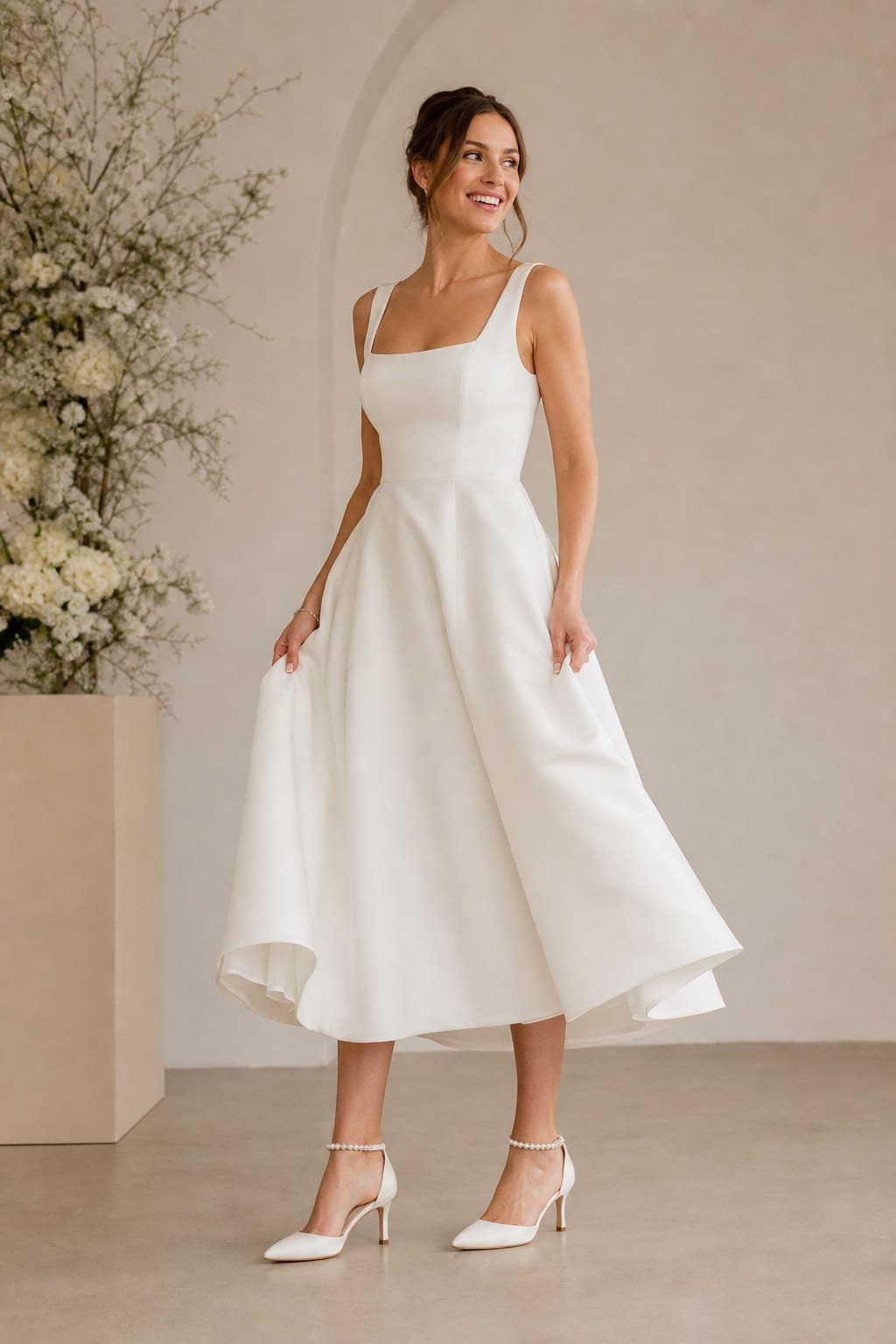
Use satin as a connecting detail
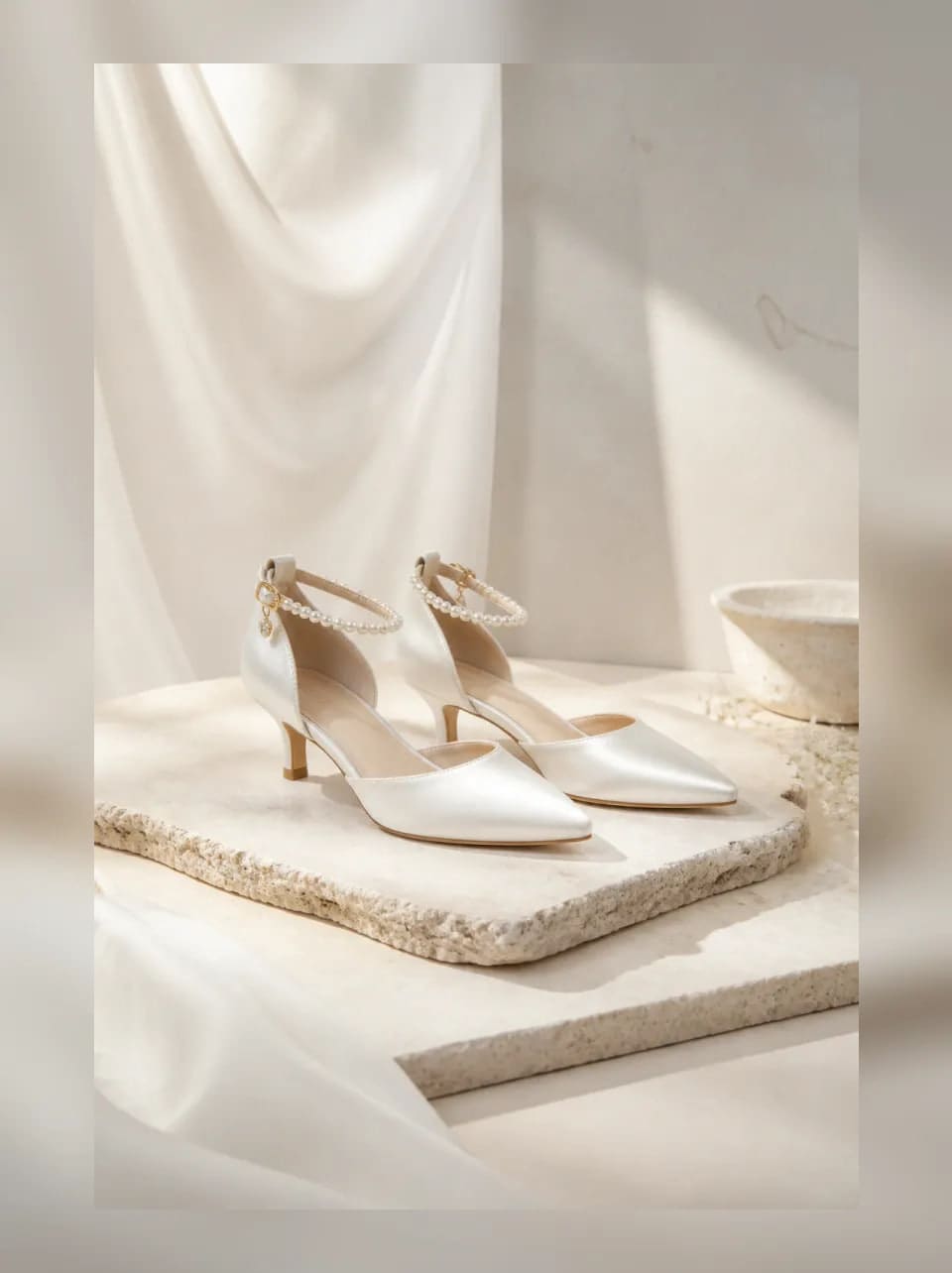
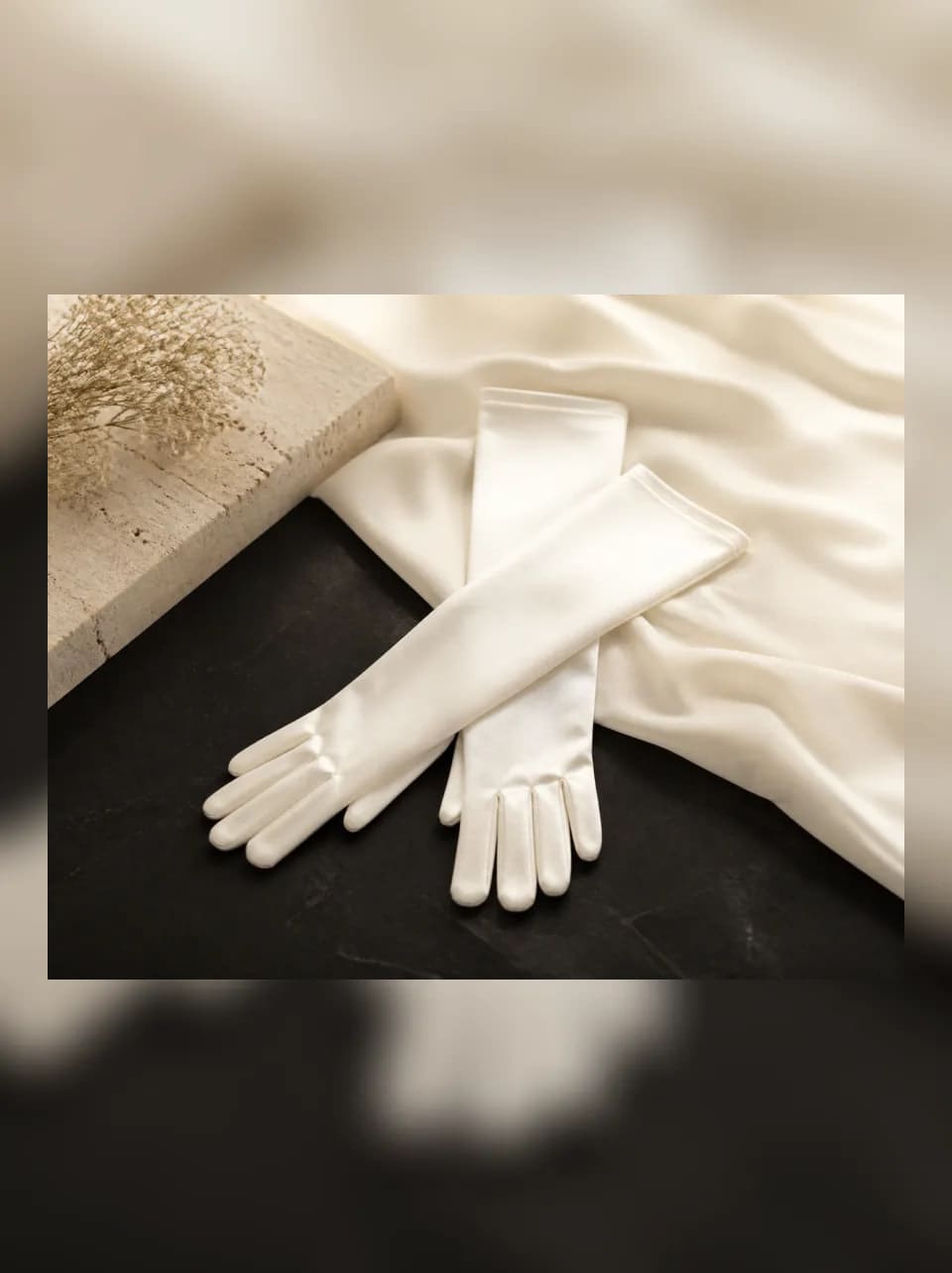
A smooth shoe, scarf, or clutch can create a visual link across the outfit. Compare sheen as well as color: two ivory pieces may catch the light quite differently. Try the accessories together in the lighting where you can best see their surfaces.
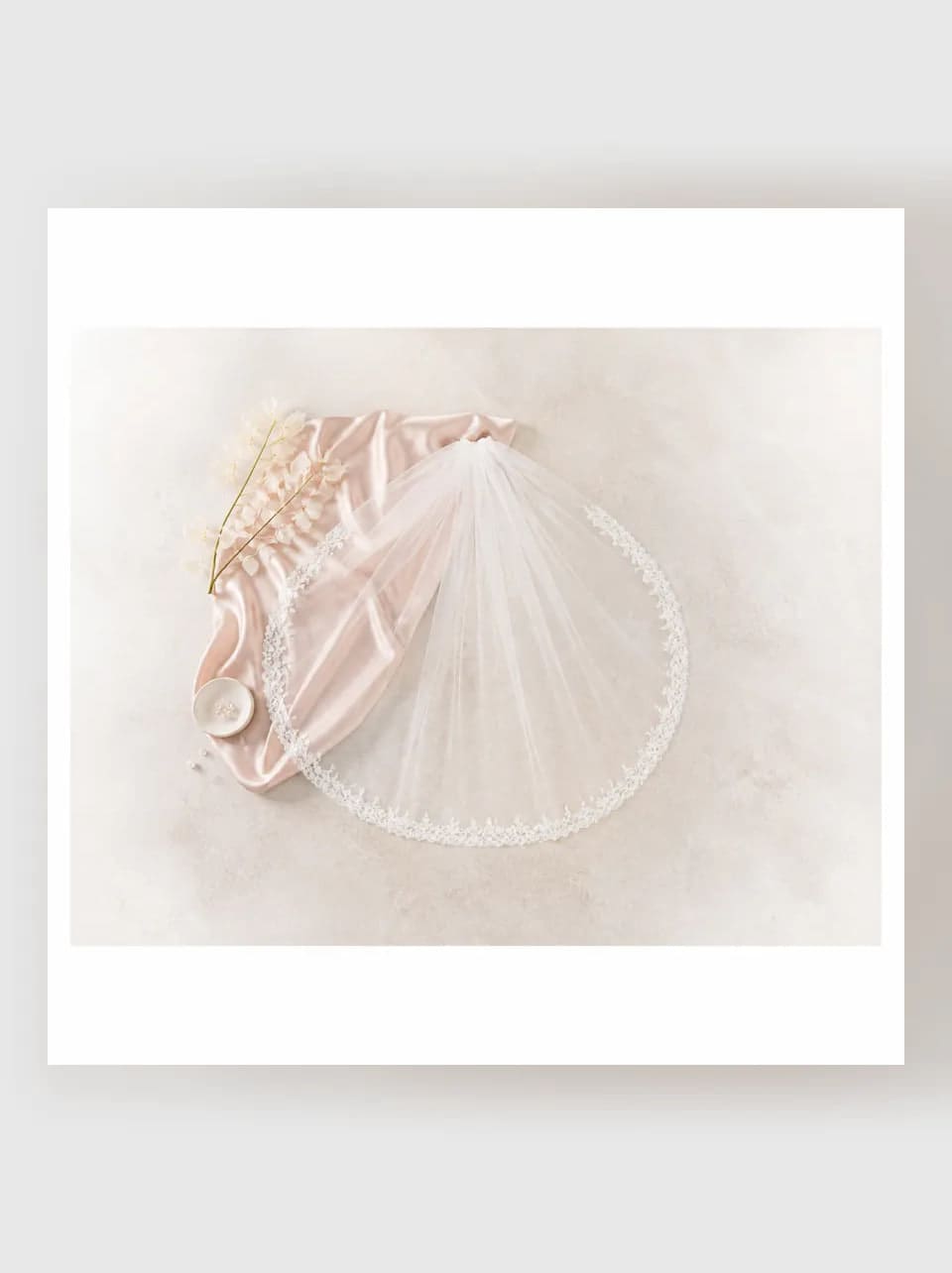
Compare lace at the right scale
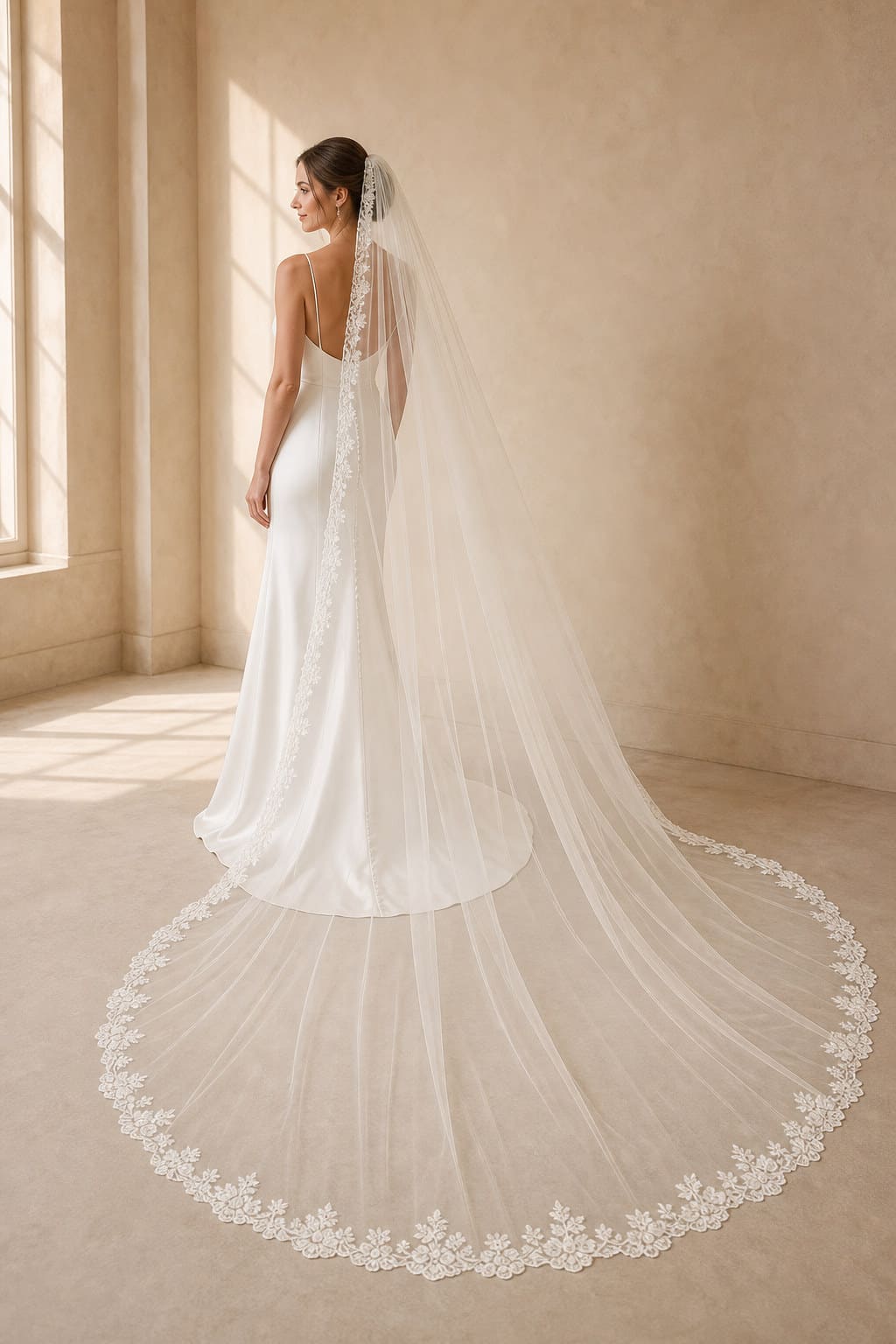
Place the veil or layer beside the gown and look at the size, spacing, and edge of the motif. Similar colors do not automatically make patterns feel connected. A clean dress can give a lace edge room to show its shape.
Finish with restraint where it helps
If several pieces compete, remove one and look again. A soft pearl stud or a clear neckline can give a richly textured veil more room. Keep the final arrangement connected to the dress, the setting, and the way you want to feel.