 VANKPA

Reporting & Dashboards
Know what needs attention without rebuilding the report.
Bring agreed business data into a dashboard built around your team’s weekly decisions.

Who it is for
A focused way forward.
For owners and small teams who rebuild reports by hand or cannot reconcile the numbers across their tools.
- Engagement
- Reporting & Dashboards
- Timing
- Timing follows a source-access and scope review. Custom application builds typically take 8–20+ weeks and start at $18,000; the proposal confirms the work.
- What you receive
- Agreed KPI definitions and source map
Problems it solves
Signs this may be the right starting point.
If these challenges sound familiar, this service may help you move forward.
Conflicting KPI definitions
Stale or missing records
No clear next action

Plan before you build
Agree on the goal. Then plan the work.
Agree on the decision and what each measure means before connecting data. Show when records were updated, what is missing, and who needs to act.
Define the decision
Name the weekly question, the person acting on it, and the reporting work that happens today.
What you receiveDecision brief and reporting baseline
Check the sources
Check access, definitions, sample records, and the owner of each source. Establish which data is usable and where the gaps are.
What you receiveSource map and KPI definitions
Reconcile before displaying
Check calculations and record mismatches. Set freshness, missing-data, and refresh-failure rules.
What you receiveReconciliation checks and data issue list
Build the focused view
Make exceptions and useful next actions visible. Test role-appropriate access, filters, and exports.
What you receiveA dashboard around the agreed decision
Hand over and measure
Show the owner how to refresh the report and recover from failures. Review preparation time, discrepancies, and how quickly issues reach the right person.
What you receiveOperating guide and measurement plan
Scope defined
Included work, exclusions, responsibilities, and review points are agreed before delivery.
Outputs named
You know what you will receive and how each part supports your project.
Senior lead
Van stays close to the strategy, experience, engineering, and launch.
Scope clarity
Know what the work includes.
The proposal names the sources, outputs, owners, and checks for your project.
What is included?
- Decision and KPI definitions with named source owners
- Scoped source connections and reconciliation checks
- Data freshness, missing-data, and refresh-failure rules
- Role-appropriate dashboard with useful filters and drill-downs
- Agreed exports, operating guide, and owner handover
- Data issue list and a reporting baseline
What is outside the scope?
- Unlimited data sources or a full data-warehouse rebuild
- Invented data or unsupported live-connection claims
- Unreviewable AI totals or causal explanations
- Vendor and infrastructure fees outside the proposal
What do we need to begin?
- A named decision-maker and recurring operating decision
- Accessible, legally usable source data
- Agreed definitions and a source owner
- Clear data sensitivity, access roles, and ongoing ownership
How will progress be measured?
- Compare reporting preparation time, reconciliation discrepancies, refresh failures, data freshness, and time from an issue being found to an assigned action. Usage alone is not business value.
Can this include AI summaries?
- Only when agreed and useful. Summaries must point to source records, flag uncertainty, and stay reviewable. They must not fabricate totals or causal explanations. Illustrative data is labeled, and missing or stale data remains visible.
A practical starting point
Let’s plan your next move.
A short description is enough to begin. Tell Van about your business, the challenge, and your timing and budget if known.
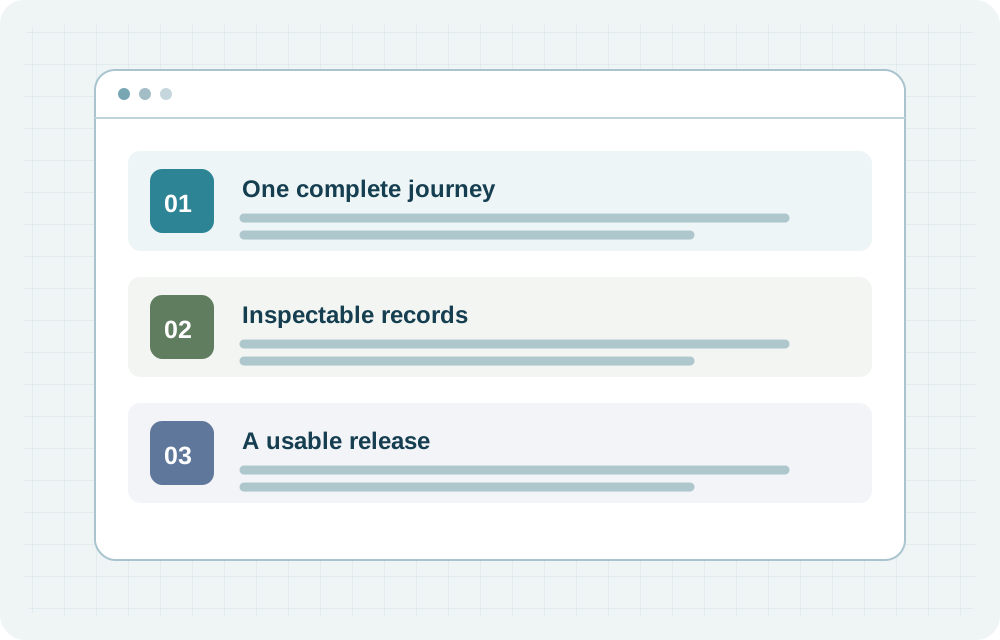
Build the task before expanding the platform
- 01One complete journey
Define the user, permissions and task that the first release must support.
- 02Inspectable records
Keep source ownership, validation and exception handling visible.
- 03A usable release
Test the task, document the operating needs and prepare the owner.